Healthcare — Addiction Treatment · Pleasant Grove, Utah
White Sage Recovery went from blocked advertising to a compliant paid acquisition channel
White Sage Recovery wanted to reach patients through paid search, but addiction treatment cannot be advertised on Google without certification and advertiser approval the facility had no route to. We rebuilt the site around admissions and worked backward through the dependencies until the channel was live.
Certified
LegitScript certification in place, the prerequisite for advertising addiction treatment
Approved
Google advertiser approval granted, activating a channel previously closed to the facility
$0
Paid website-platform subscription; domain registration is the only recurring website cost
The situation
White Sage Recovery runs a medically monitored drug and alcohol detox facility in Pleasant Grove. The clinical side of the operation was not the problem. Reaching the people who needed it was.
They wanted to acquire patients through search, and had tried. What they ran into was not a budget problem or a bidding problem. Addiction treatment is one of the most tightly restricted categories Google has, and White Sage could not run addiction-treatment advertising through Google without first completing the required certification and advertiser approval process. For this facility, that meant LegitScript certification had to be in place before the channel could be activated at all.
The facility had no internal marketing team experienced with regulated healthcare advertising. So there was no clear path from "we want to advertise" to the certifications, account approvals, compliant website, and campaign infrastructure that actually doing it requires. The objective was obvious to everyone; the route to it was not.
Underneath that sat the website. It was a Wix template several years past its useful life, costing roughly $400 a year to keep online. The subscription was never the real cost. The cost was that the site could not have converted paid traffic even if the traffic had been allowed to flow: information about detox, admission, insurance, and what a stay actually involves was spread thin and hard to follow, on a layout that had not been built with a phone in mind. Someone arriving with an urgent question had to work to find the answer.
The order the work had to happen in
The engagement was not three separate deliverables. It was one dependency chain, where each stage gated the one after it:
Reading that left to right is the whole consulting argument. Keyword research, campaign structure, and budget planning are the work people expect to buy first, and all of it is worthless until the account is permitted to serve — so doing it first would have been wasted effort, and doing it well would not have moved the date the channel went live by a single day. The certification and approval process was the critical path. Everything else was scheduled around it.
What we focused on
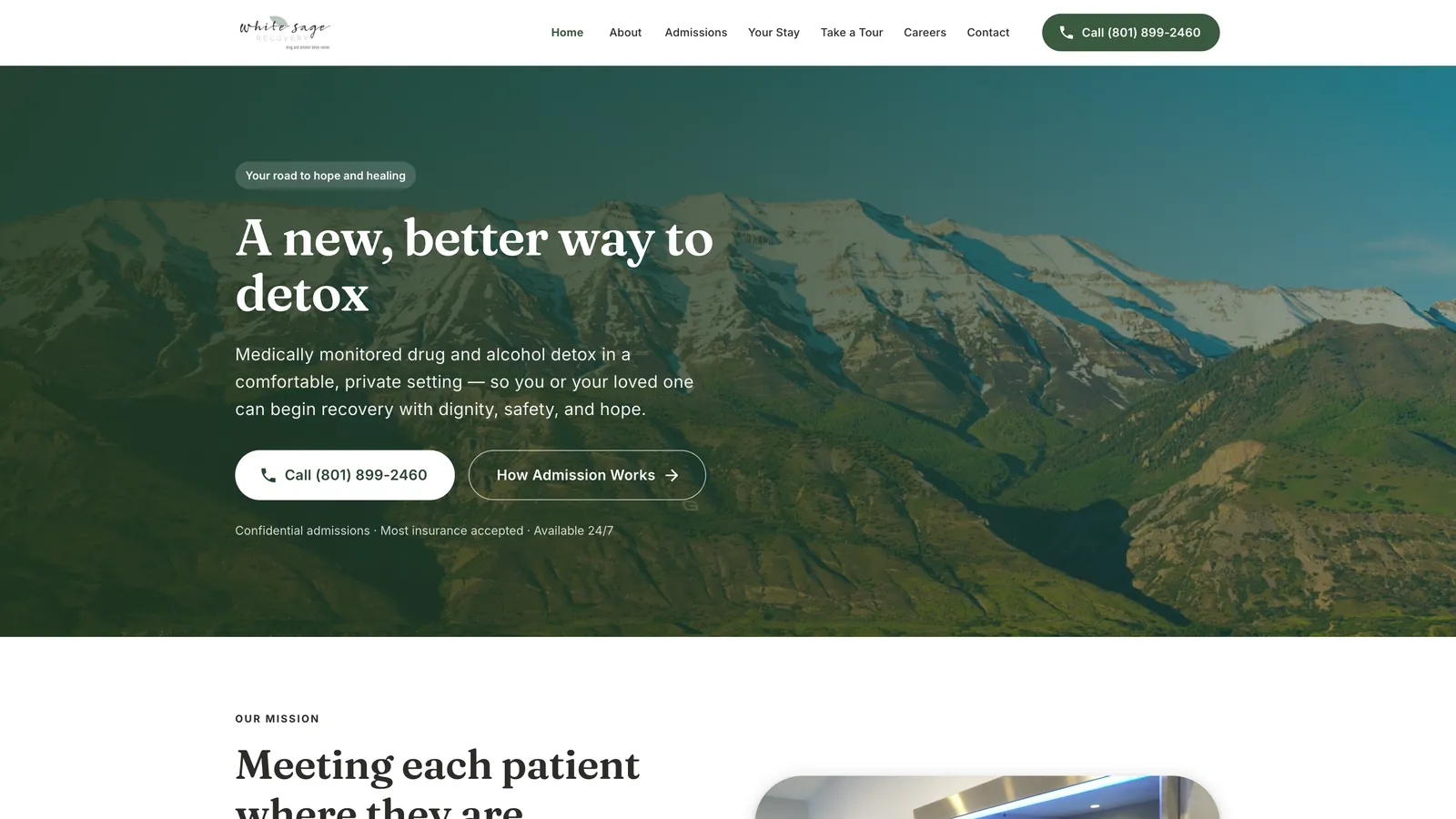
Design for the person who is actually visiting. The visitor is rarely browsing casually. It may be a prospective patient, or a family member trying to understand the options and decide whether to make a difficult phone call. That framing set the priorities: the phone number lives in the header and repeats as the primary button, and the facts that most often decide whether someone calls — that admissions are confidential, that insurance is accepted, that someone is available 24/7 — are stated where the hesitation happens rather than filed on a policy page. The site is built phone-first because for this category the phone is the conversion, not a fallback for people without a laptop.
Answer the questions that stop people calling. The old site made a visitor hunt. The rebuild gives the recurring worries their own clear places — what admission involves, what insurance is accepted, what the facility looks like, what a stay is like — because someone who cannot find out what happens next tends to close the tab rather than ask. Presenting that clearly is conversion work, and it doubles as the substance search engines need to rank the site for what people actually type.
Treat regulatory clearance as the critical path, not paperwork. Covered above, and it was the single most consequential decision in the engagement. It determined what got built when, and it is the reason the channel went live rather than stalling in review.
Own the asset, because it fit this client. Wix is a reasonable product and there is nothing inherently wrong with a hosted subscription platform; plenty of businesses are well served by one. The objection here was fit, not platform. White Sage needed a site shaped around a specific admissions path, and had no reason to keep paying a recurring fee for a template it could not shape that far. So the rebuild is theirs, deployed to infrastructure in their own accounts, with no platform subscription attached to it.
The approach
The site was rebuilt from scratch, with the content structure reorganized around the questions above rather than carried across from the old template. Design happened against real copy on a staging URL the team could open on their own phones, because a site whose primary interaction is a phone call has to be reviewed on a phone.
Alongside the build, we did the work that made the facility reviewable. That meant getting the business identity consistent — legal name, address, and contact details matching across the website, the certification paperwork, and the Google account, since inconsistencies between those records are a common reason regulated-category applications stall. It meant building the site infrastructure the review expects, including a proper privacy policy and clearly published contact information. And it meant handling the Google side end to end: submitting the LegitScript certification to Google and working through their advertiser verification and approval process to completion.
None of that is glamorous, and all of it was the difference between a campaign that can serve and one that cannot. With approval granted, the Google Ads account was configured and campaigns were built to bring in new inquiries.
White Sage owns the site, the deployment, the domain, and the ad account. The site is a static build running in the facility's own infrastructure at no platform charge, which leaves domain registration as its only recurring website cost.
Outcome
The engagement moved White Sage from being structurally blocked from paid search to having a compliant, live acquisition channel. What can be stated plainly today, in the order it matters:
- LegitScript certification in place, the prerequisite for advertising addiction treatment through Google
- Google advertiser approval granted, activating an acquisition channel that was previously closed to them
- Paid search live, with campaigns built and structured to bring in new inquiries
- The website rebuilt around admissions, phone-first, with the information a prospective patient or their family needs presented in a way they can follow
- Ownership of the site, deployment, domain, and ad account transferred to the client
- The Wix subscription eliminated, with no paid website-platform subscription replacing it
What is not being claimed. Paid acquisition results are still being measured. The campaigns have not been live long enough to report traffic, lead, or revenue changes responsibly, so this case study reports none. It will be updated once there is a meaningful measurement window.
How these figures were measured. "Certified" refers to LegitScript certification being in place for the facility; "Approved" refers to Google's corresponding advertiser approval to serve addiction-treatment ads, completed through the client's own Google Ads account. The "$0" figure is the recurring website-platform cost: the prior Wix subscription of approximately $400 per year is no longer being paid, the new site runs as a static deployment in White Sage Recovery's own infrastructure at no platform charge, and domain registration is the only recurring website cost that remains. No traffic, conversion, or revenue figures are reported, because the measurement window is not yet long enough to support them. Published with White Sage Recovery's permission.
Let's find out what your website could be doing
Tell us what you're trying to grow and where it's stuck right now. If we're not the right fit, we'll say so and point you somewhere better.